Milkweeds in the Fall Garden

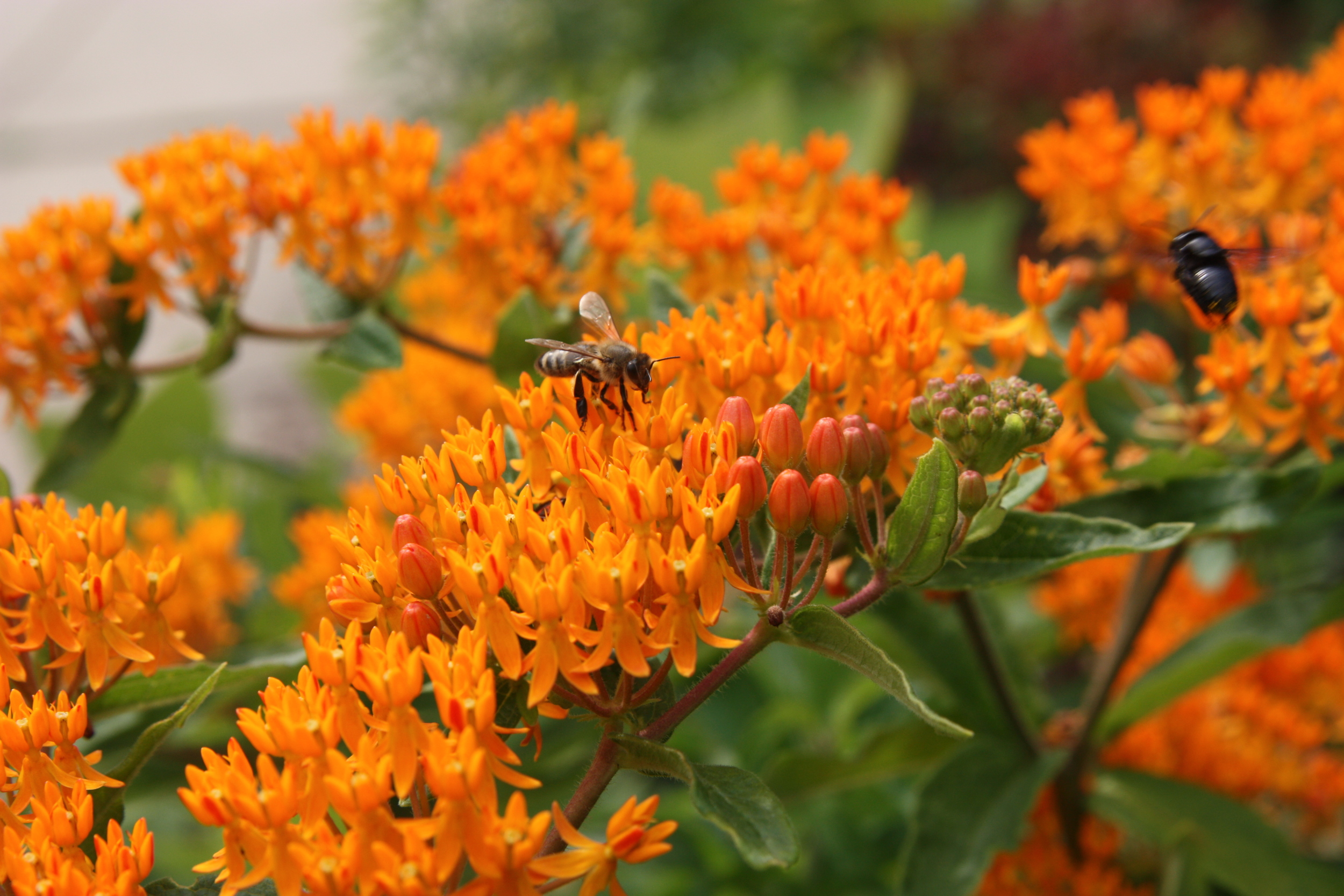
Shattering milkweed pods release floating seeds that turn and fly like aerial gossamer ladies in petticoats. In my milkweed-laden garden, these airborne seeds are the surest sign of late fall. All milkweeds produce the large, plump pods, from the profuse Mexican native Asclepias curassavica, to the pumpkin-orange-flowered Asclepias tuberosa, and white-flowered Asclepias incarnata 'Ice Ballet'. The delicate seedpod show in fall is subtle but pretty. And I know that many of the seeds will find a home and eventually bloom where they are planted. This is especially encouraged with Asclepias tuberosa, a personal favorite and regional native.

Each year I take a few of the seeds and place them strategically where I want them to grow. Once the pods are empty, they continue to provide winter interest, particularly if standing among winter grasses that don't lost their verve after one or two snows. So I leave mine up until they begin to look winter worn.

Dried milkweed pods also bring back Christmas memories. My grandmother used to make milkweed ornaments by gluing cotton clouds along the interiors, adding golden angel figurines then dusting each decorated pod with glitter and spray snow. She must have added the hooks for hanging first. She used the bumpy pods of the common milkweed (Asclepias syriaca), which are quite large and woody when dried.

One easy way to invite native milkweeds into your garden is to go into old fields in fall, find erupting milkweed pods and collect the seeds for garden sprinkling. Shorter statured plants collected from upland fields will likely be Asclepias tuberosa, the orange butterflyweed. The memory of their bright summer color keep me spreading seeds for more next season. 

Eastern Filbert Blight

In one year, this contorted filbert has almost completely succumbed to eastern filbert blight.

In one year, this contorted filbert has almost completely succumbed to eastern filbert blight.

I had never experienced eastern filbert blight (Anisogramma anomola) until this year, and my first exposure was a rude awakening. Last year my glorious contorted filbert (Corylus avellana var. contorta) was a prime specimen. By late summer, strange patterned cankers appeared on some of the branches accompanied by dieback. By this spring, new leaves barely appeared and the death of my beloved shrub was nearly complete. Never have I seen a disease consume a large, woody plant so completely and with such speed.

Here's the story. This North American fungal blight attacks the native hazelnut or filbert (Corylus americana) but native species are resistant and don't die. Some stem dieback will occur with natives, but diseased branches are easily pruned away. Non-native hazelnuts have a different fate.

European hazelnuts (Corylus avellana), Turkish hazelnuts (Corylus colurna), giant filberts (Corylus maxima) and other Old World species are quickly taken by the disease with no chance of survival. For this reason, hazelnuts are not grown as a crop in the Northeast US.

Once stems show the telltale signs of disease, there is no need to try to save your ornamental filbert. It must be replaced with something else.

Learn more about eastern filbert blight at the Cornell University Plant Diagnostic Info Page.

Cankers that appear along stems are the sure sign that this disease has taken hold.

Cankers that appear along stems are the sure sign that this disease has taken hold.


Great Weeding Tools

Over the years I have used any number of different gardening tools for hand weeding, planting and general cultivation. A few have stood out and become fast favorites. The three key characteristics I look for in a good gardening hand tool are: 1. ease of use, 2. working power, and 3. durability. These criteria are met by the following tools:

Fine-bladed hand trowels are excellent all-purpose tools for weeding and planting. They quickly cut at deep or shallow roots in no time and withstand lots of wear and tear if made well. The "rockery hand trowel" at Clarington Forge is just such a fine-bladed tool, and it's beautifully crafted for the long haul. Its fine blade makes for easy weeding and planting--especially in heavier or pebbly soils.

The narrow rockery hand trowel from Clarington Forge easily expels weeds and gets into small spaces. (image care of Clarington Forge)

The narrow rockery hand trowel from Clarington Forge easily expels weeds and gets into small spaces. (image care of Clarington Forge)

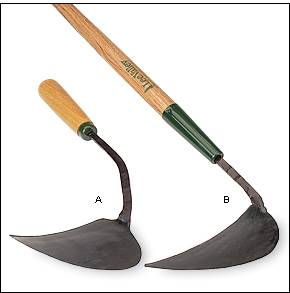
For super fast hand weeding nothing beats the classic ho-mi (hoe-mee), also called the Korean hand plow or cultivator. This sharp, downward-facing tool can get to the base of a dandelion root in seconds with a quick chop, chop, chop. Nothing is more effective. For smaller weeds, I use the side of the ho-mi to scratch and smooth the soil. It’s an excellent tool for lightly aerating the base of a plant or getting to the root of a tough herbaceous weed as well as planting new plugs. If well cared for, a ho-mi will last forever (if cleaned after use and oiled to prevent rust). It's relatively cheap, too. Long-handled versions are also very useful. Just be careful when chopping away with this sharp tool. Its tip can be nasty.

The sharp ho-mi will chop deeply into the soil quickly. (image care of Lee Valley)

The sharp ho-mi will chop deeply into the soil quickly. (image care of Lee Valley)

A child-friendly weeder that's easy for the little ones to wield is the Dutch hoe from Clarington Forge. It's not sharp, scrapes up surface weeds with little effort and keeps the kids helping out in the garden. This kid-sized Dutch hoe allows children to help out in the garden, and it's fun to use!

I could not get by in the garden without my trusty garden knife (also called a soil knife or Japanese hori-hori). It can cut into the soil to deep roots below and saw through the bases of tough plants. I even use it for harvesting greens and cole crops. One side of the knife is sharp for slicing and the other is serrated for sawing. This tool can easily break through skin, so its best held in a leather belt holder or sheath.

Sharp cutting and sawing edges make gardening knives one of the best all-around gardening tools. (image care of the Gardeners Supply Company)

Sharp cutting and sawing edges make gardening knives one of the best all-around gardening tools. (image care of the Gardeners Supply Company)

The Cobrahead company sent me a sample of their classic Cobrahead hand weeder and cultivator, and it's a nice, effective, well-made weeding tool. It has a sharp, curved head that makes for fast digging and hand hoeing.

The Cobrahead Hand Weeder and Cultivator is an effective weeding tool. (image care of Cobrahead)

The Cobrahead Hand Weeder and Cultivator is an effective weeding tool. (image care of Cobrahead)

For big "weeds" choose a Pullerbear uprooter. In a matter of minutes, an area riddled with small weed trees can be cleaned beautifully roots and all. It works like no other tool I've tried. Just clench the base of the sapling or small tree and pull. Ignore the fact that it’s a bit pricey. It will pay for itself quickly in time and effort saved wrangling with hard-to-pull woody weeds.

Pretty, Tough Succulents

As I write my latest article on succulents, I am reminded of some of my favorite sedums, sempervivums, and yuccas, among others. Their ability to offer shining beauty in the hottest summer months and coldest winter days is what draws me to them. And, they require little care, which means a lot to a busy, working mom gardener like me. Here are a few I cannot do without:

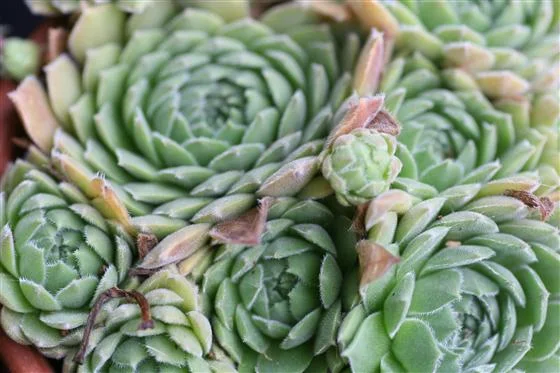
Sempervivum 'Cleveland Morgan' is a sea green succulent able to withstand the harshest winter cold, if planted in a sharply drained spot. Pretty much any sempervivum makes me happy.

Sempervivum 'Cleveland Morgan' is a sea green succulent able to withstand the harshest winter cold, if planted in a sharply drained spot. Pretty much any sempervivum makes me happy.

Sedum album and Opuntia humifusa bloom at the same time each year--around early June--and look lovely without additional care. Both continue to shine in the garden after bloom time.

Sedum album and Opuntia humifusa bloom at the same time each year--around early June--and look lovely without additional care. Both continue to shine in the garden after bloom time.

The blue-green, spiky Agave americana is not hardy here, but it thrives in pots that can be brought indoors and out. (photo taken at Chanticleer)

The blue-green, spiky Agave americana is not hardy here, but it thrives in pots that can be brought indoors and out. (photo taken at Chanticleer)

Rose Rosette Disease

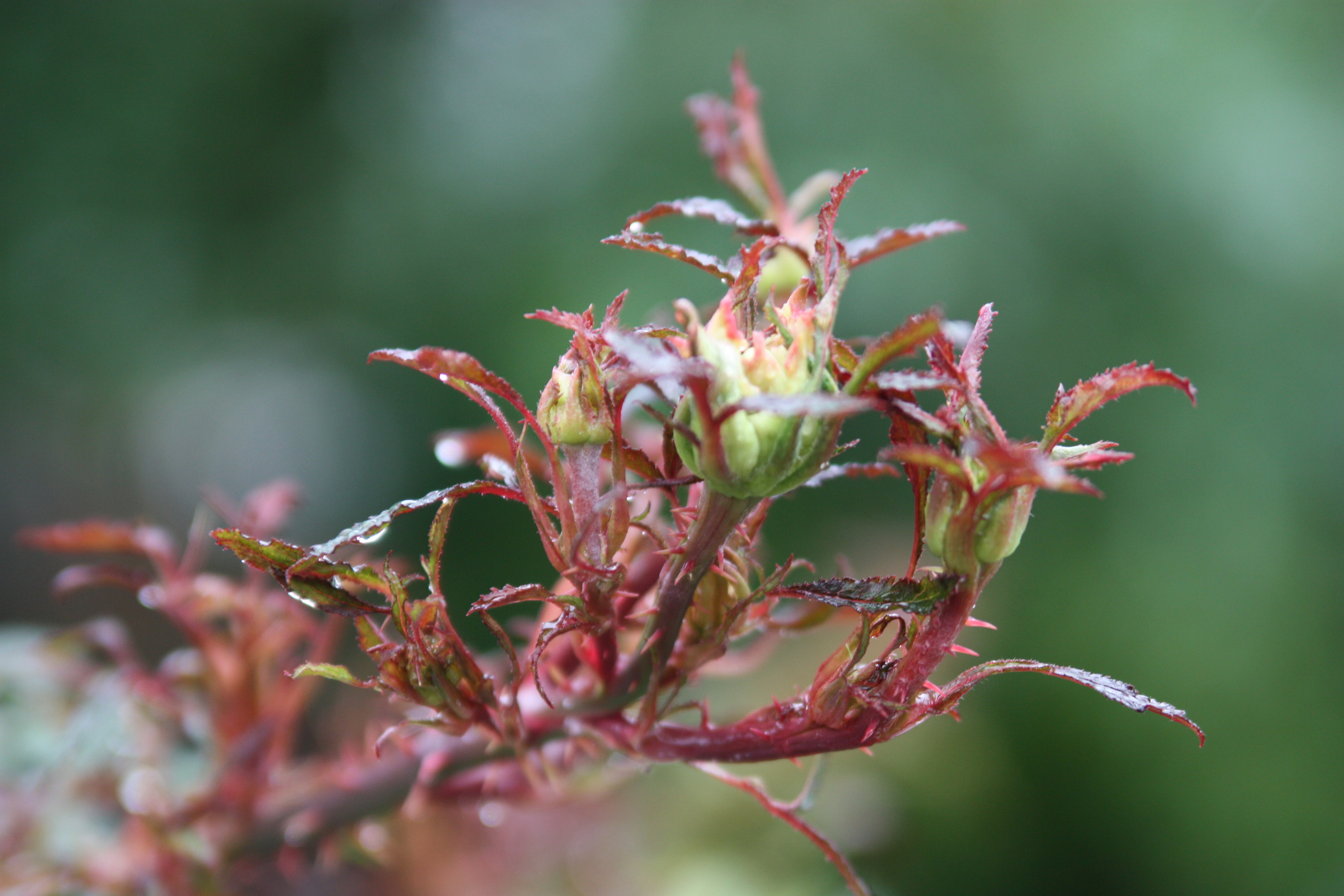
New growth on a climbing rose with RRD.

New growth on a climbing rose with RRD.

Sometimes the best way to learn about a new plant disease is to see it for the first time in person. While passing a neighbor's rose, I noticed it had the most irregular tip growth imaginable. The unusually reddish leaves were dense, fine and the growth reminded me of a stunted witch's broom (a physiological abnormality caused by various diseases). I took a couple of photos of the strange shoots and leaves, took them home and quickly identified the problem via a basic Google search--Rose Rosette Disease (RRD).

There's a reason I didn't recognize it right away. This disease, which is thought to be caused by a virus spread by eriophyid mites, has only recently been troublesome to cultivated roses. It was originally found in 1940 on the invasive multiflora rose (Rosa multiflora), and to this species it is deadly. Data supports it is equally as deadly to garden roses--and Knock Out® roses have been shown to be particularly susceptible. As with most plant viral diseases, there is no cure for RRD.

There are lots of roses in my garden, so I'm hoping the disease won't come my way, but anything vectored by insects can't be contained forever. I wonder how much time I have?

Virginia Tech has a great write up on RRD. Give it a read.

A rose branch with RRD.

A rose branch with RRD.

Three Step Vegetable Garden Prep

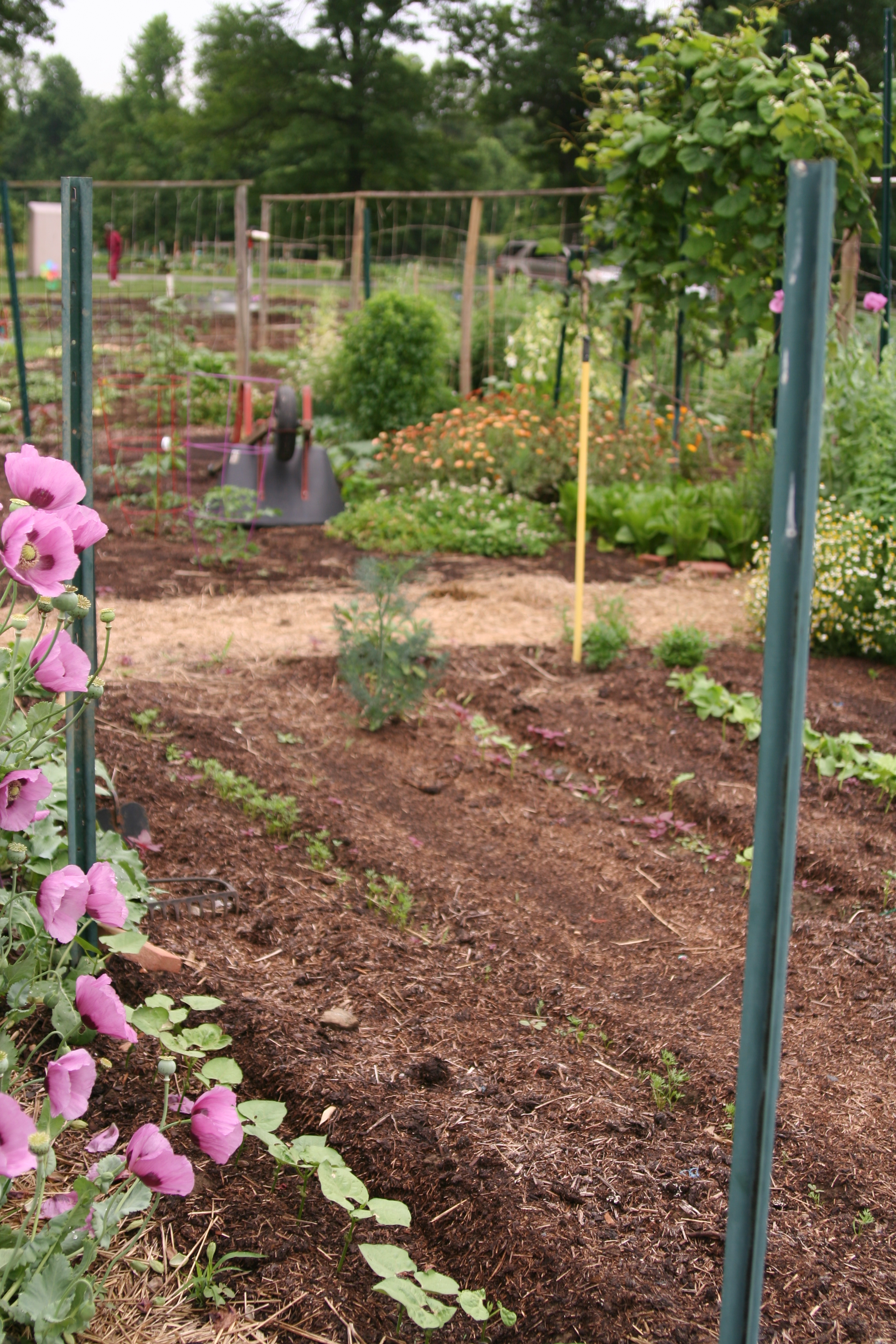
Protective layers of compost and straw make gardening easier throughout the growing season.

Protective layers of compost and straw make gardening easier throughout the growing season.

Rain and snow melt make spring veggie garden prep a challenge every year, but once I can get into the garden, I have a yearly regime that ensures good crop growth while minimizing weeds. Turning, tilling, and covering (with amendment) are the three practices that enable me to garden productively, even when time is limited.

Turning

Some areas in my vegetable garden are "no till." These include beds with perennial and winter crops, like asparagus, garlic, strawberries and hardy herbs, as well as well-amended spots that are already in good shape below ground. In these areas, I simply add a cover of compost and gently turn them with a garden fork, breaking up the top soil a bit before adding a layer of protective compost.

Tilling

There are several bed areas that are tilled yearly. In these spots, I add double amendment. First, I put a layer of compost down to till in, then I rake and berm bed spaces. Finally I add a second layer of compost to further enrich the soil and protect against weeds. This is extra important in tilled areas because the practice of tilling brings lots of weed seeds to the surface.

Cover

In addition to adding a compost mulch layer, I protect and define walkways with leaf mulch, straw or hay, and grass clippings. These natural mulches stop weeds and make it easier to traverse the garden in wet, muddy weather. They also hold water and keep root zones cool on hot summer days. By fall's end, they have usually broken down into accessible organic matter.